
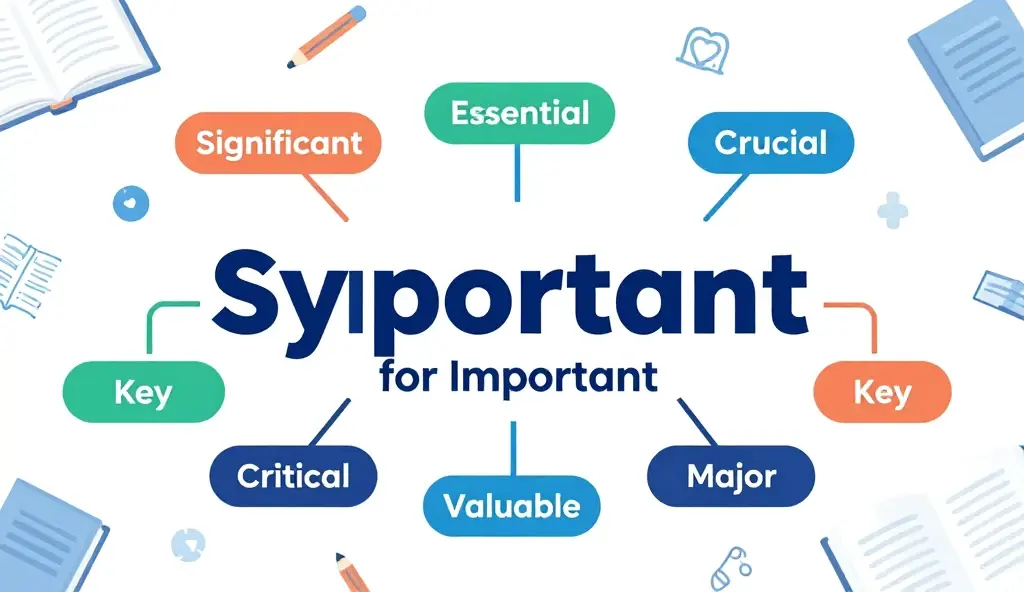
Synonyms for important include significant, essential, crucial, vital, major, meaningful, influential, valuable, notable, and critical. The right choice depends on the sentence. An important decision may be major or critical.
An important rule may be essential. An important person may be influential or prominent.
An important memory may be meaningful. Choosing a specific word makes your writing clearer and more natural.
What Does Important Mean?
Important describes someone or something that has great value, influence, effect, meaning, or necessity.
A person, fact, event, task, or decision is important when it deserves attention because it can affect what happens next.
Major dictionary definitions cover two central meanings:
- Something is necessary or has great value.
- Someone or something has a strong effect or influence.
Cambridge describes “important” as necessary, valuable, or having a great effect or influence. Oxford similarly defines it as having a great effect on people or things or being of great value.
Consider these examples:
- Clean water is important for health.
- We have an important decision to make.
- She played an important role in the project.
- This is an important historical event.
- He became an important political figure.
The meaning changes slightly in each sentence.
“Important for health” means necessary or beneficial.
“An important decision” means a decision with serious effects.
“An important role” means a role that strongly affects success.
“An important event” means an event with major meaning or consequences.
“An important figure” means an influential or well-known person.
Important Meaning in Simple English
In simple English, important means:
Something that matters a lot and should not be ignored.
It may describe something that is:
- Necessary
- Valuable
- Serious
- Influential
- Meaningful
- Powerful
- Worth noticing
- Connected to a major result
- Needed for success
- Likely to affect other people
Here are some simple examples:
- Sleep is important for children.
- This test is important.
- Family is important to her.
- He gave me important advice.
- The meeting will cover important issues.
A thing does not need to be large or expensive to be important.
A small key can be important because it opens a needed door.
A short message can be important because it contains urgent news.
A simple habit can be important because it protects your health.
Why People Search for Synonyms for Important
“Important” is a useful word, but it is also very common. Writers often repeat it in essays, reports, emails, articles, presentations, and school assignments.
Consider this paragraph:
“The meeting was important. We discussed an important problem and made an important decision. The manager also shared some important information.”
The meaning is clear, but the repeated wording sounds weak.
A stronger version would be:
“The meeting was significant. We discussed a critical problem and made a major decision. The manager also shared essential information.”
Each replacement tells readers why the subject matters.
People also search for another word for important because they need a term that fits a certain context.
They may need:
- A formal synonym for a report
- A simple synonym for children
- A strong word for an emergency
- A professional word for an email
- An academic alternative for an essay
- A synonym for an influential person
- A word for something personally meaningful
- A word for a necessary task
- A word for a historic event
No single synonym works in every situation.
Pronunciation of Important
The word important is commonly pronounced:
British English: /ɪmˈpɔː.tənt/
American English: /ɪmˈpɔːr.tənt/
A simple pronunciation guide is:
im-POR-tuhnt
The main stress falls on the second syllable:
im-POR-tuhnt
Cambridge provides separate British and American pronunciations, with the main stress placed on the middle part of the word.
To pronounce it naturally:
- Begin with a short im sound.
- Stress por.
- End with a quick tuhnt sound.
Say it smoothly:
im-POR-tuhnt
In fast American speech, some speakers soften the final sounds. It may sound close to:
im-POR-dnt
However, learners should first practice the clearer pronunciation:
im-POR-tuhnt
Pronunciation in a Sentence
“This is an important question.”
Say it naturally:
“This is an im-POR-tuhnt question.”
Part of Speech of Important
Important is an adjective.
An adjective describes a noun or adds information about it.
Examples:
- An important meeting
- An important person
- An important lesson
- An important question
- An important change
- An important discovery
In each phrase, “important” describes the noun that follows it.
Important After a Linking Verb
“Important” can also appear after verbs such as:
- Be
- Seem
- Become
- Remain
- Feel
- Appear
Examples:
- This issue is important.
- The meeting seems important.
- Her work became more important.
- Safety remains important.
- The decision feels important.
Related Word Forms
| Word | Part of Speech | Meaning | Example |
| Important | Adjective | Having great value or effect | This is an important task. |
| Importance | Noun | The quality of being important | She understands its importance. |
| Importantly | Adverb | In an important way; used to add a key point | More importantly, the plan is safe. |
| Unimportant | Adjective | Not important | The error was unimportant. |
| All-important | Adjective | Extremely important | They scored the all-important goal. |
Important vs. Importance
Use important to describe a noun:
- Health is important.
- It was an important meeting.
Use importance as a noun:
- We understand the importance of health.
- He explained the importance of the meeting.
Quick List of Synonyms for Important
Merriam-Webster lists alternatives such as major, significant, historic, meaningful, and substantial, while other close choices depend on the intended sense.
| Word | Meaning | Best Usage | Formality | Example | Difficulty |
| Significant | Having a noticeable effect or meaning | Results, events, changes | Formal/neutral | The study found a significant difference. | Medium |
| Essential | Completely necessary | Needs, skills, supplies | Formal/neutral | Water is essential for life. | Easy |
| Crucial | Extremely important to success | Decisions, moments, steps | Formal/neutral | Timing is crucial. | Medium |
| Vital | Necessary for life or success | Health, systems, information | Formal/neutral | Sleep is vital for recovery. | Medium |
| Major | Large or important in effect | Events, decisions, problems | Neutral | This is a major change. | Easy |
| Critical | Extremely important or serious | Safety, decisions, stages | Formal/neutral | Communication is critical. | Medium |
| Meaningful | Having personal or deeper value | Experiences, relationships | Neutral | We had a meaningful conversation. | Easy |
| Valuable | Useful, helpful, or worth much | Advice, time, skills | Neutral | She gave valuable advice. | Easy |
| Influential | Able to affect people or decisions | People, books, ideas | Formal/neutral | He was an influential writer. | Medium |
| Prominent | Important and widely noticed | People, positions, features | Formal | She is a prominent scientist. | Medium |
| Notable | Worth attention | Events, people, features | Formal/neutral | The city made notable progress. | Medium |
| Consequential | Producing serious results | Decisions, events | Formal | It was a consequential election. | Hard |
| Momentous | Extremely important in history or life | Events, occasions | Formal | It was a momentous day. | Hard |
| Historic | Important in history | Events, agreements | Neutral | They reached a historic agreement. | Easy |
| Central | Most important to a subject | Ideas, problems, roles | Formal/neutral | Trust is central to the relationship. | Easy |
| Key | Very important to success | Factors, roles, points | Neutral | Price is a key factor. | Easy |
| Main | Most important or largest | Ideas, reasons, goals | Neutral | Cost is the main concern. | Easy |
| Primary | First in importance | Goals, causes, duties | Formal | Safety is our primary concern. | Medium |
| Principal | Most important | Reasons, roles, causes | Formal | The principal cause was poor planning. | Medium |
| Fundamental | Basic and necessary | Rights, ideas, principles | Formal | Trust is fundamental to teamwork. | Medium |
| Indispensable | So necessary it cannot be replaced | People, tools, resources | Formal | The guide became indispensable. | Hard |
| Imperative | Extremely necessary or urgent | Actions, duties | Formal | Immediate action is imperative. | Hard |
| Urgent | Needing immediate attention | Messages, problems, needs | Neutral | This is an urgent request. | Easy |
| Pressing | Needing quick attention | Issues, problems | Formal/neutral | Housing is a pressing concern. | Medium |
| Serious | Important because of risk or consequences | Problems, matters, illness | Neutral | This is a serious issue. | Easy |
| Weighty | Serious and important | Decisions, matters | Formal | They discussed weighty questions. | Hard |
| Pivotal | Central to what happens next | Moments, roles, decisions | Formal | She played a pivotal role. | Medium |
| Decisive | Determining the final result | Actions, moments, victories | Formal | His vote was decisive. | Medium |
| Substantial | Large or important in amount or effect | Changes, evidence, support | Formal | The project made substantial progress. | Medium |
| Relevant | Important to the current subject | Facts, experience, evidence | Formal/neutral | Include only relevant details. | Easy |
| High-priority | Requiring attention before other things | Tasks, cases, projects | Professional | This is a high-priority task. | Easy |
| Far-reaching | Affecting many people or areas | Changes, policies, effects | Formal | The law had far-reaching effects. | Medium |
| Profound | Very deep or powerful | Effects, ideas, changes | Formal | The loss had a profound effect. | Medium |
| Salient | Most noticeable or relevant | Points, facts, features | Formal | She summarized the salient points. | Hard |
| Paramount | More important than anything else | Safety, duty, goals | Formal | Public safety is paramount. | Hard |
Best Synonyms for Important Explained
The following alternatives are among the best synonyms for important, but they are not interchangeable in every sentence.
Significant
Meaning: Important enough to be noticed or likely to have a meaningful effect.
Example:
“The company reported a significant increase in sales.”
Difference Between Important and Significant
“Important” is broad.
“Significant” often focuses on a noticeable effect, amount, meaning, or result.
In research, “significant” may also carry a technical statistical meaning. A statistically significant result is not automatically large or practically important. It means the observed result meets a defined statistical test.
Best Situations
Use “significant” for:
- Changes
- Results
- Events
- Differences
- Progress
- Evidence
- Contributions
- Effects
Common Mistake
Do not use “significant” merely because something is interesting.
Weak:
“She wore a significant blue dress.”
Better:
“Her blue dress had symbolic importance.”
Essential
Meaning: Completely necessary.
Example:
“Clear communication is essential for teamwork.”
Difference Between Important and Essential
Something important matters greatly.
Something essential is necessary and cannot easily be left out.
A comfortable chair may be important in an office.
A safe electrical system is essential.
Best Situations
Use “essential” for:
- Needs
- Skills
- Supplies
- Information
- Steps
- Services
- Requirements
- Parts
Common Mistake
Do not call every helpful thing essential. The word should mean that success or safety depends on it.
Crucial
Meaning: Extremely important, especially to the result of a situation.
Example:
“The final interview is a crucial part of the hiring process.”
Difference Between Important and Crucial
“Crucial” is stronger than “important.”
It suggests that success, failure, safety, or the final result may depend on one factor.
Best Situations
Use “crucial” for:
- Decisions
- Moments
- Stages
- Steps
- Evidence
- Information
- Factors
- Conversations
Common Mistake
Avoid using “very crucial.” Crucial already means extremely important.
Better:
“This step is crucial.”
Not:
“This step is very crucial.”
Vital
Meaning: Necessary for life, health, operation, or success.
Example:
“Clean drinking water is vital to public health.”
Difference Between Important and Vital
“Vital” often carries a stronger sense of necessity.
It may refer directly to life and health, but it can also describe something necessary for success.
Best Situations
Use “vital” for:
- Health
- Safety
- Resources
- Information
- Services
- Organs
- Skills
- Communication
Common Mistake
“Vital” is strong. Do not use it for minor preferences.
Weak:
“Blue folders are vital for the meeting.”
Better:
“Accurate financial records are vital for the meeting.”
Major
Meaning: Great in size, importance, seriousness, or effect.
Example:
“The company announced a major change.”
Difference Between Important and Major
“Major” often describes the scale or effect of something.
It is especially natural for events, changes, decisions, problems, projects, and roles.
Best Situations
Use “major” for:
- Changes
- Decisions
- Problems
- Events
- Causes
- Projects
- Achievements
- Concerns
Common Mistake
“Major” does not always mean the most important.
A report may identify several major problems. One may still be the main problem.
Critical
Meaning: Extremely important, serious, or at a decisive point.
Example:
“Accurate information is critical during an emergency.”
Difference Between Important and Critical
“Critical” is stronger and often suggests danger, urgency, or a decisive stage.
It can also mean expressing judgment or pointing out faults.
Compare:
- Critical information means extremely important information.
- A critical review means a review that evaluates strengths and weaknesses.
- A critical patient is in a dangerous medical condition.
Best Situations
Use “critical” for:
- Safety
- Emergencies
- Information
- Systems
- Decisions
- Stages
- Thinking
- Infrastructure
Common Mistake
Make sure the context shows which meaning of “critical” you intend.
Meaningful
Meaning: Having personal, emotional, symbolic, or deeper value.
Example:
“They had a meaningful conversation.”
Difference Between Important and Meaningful
“Important” may refer to practical effect or necessity.
“Meaningful” focuses on personal value, emotional depth, or purpose.
A business meeting may be important.
A conversation with a close friend may be meaningful.
Best Situations
Use “meaningful” for:
- Conversations
- Relationships
- Experiences
- Gifts
- Work
- Memories
- Changes
- Goals
Common Mistake
Something can be meaningful without affecting many people. Personal importance is enough.
Valuable
Meaning: Useful, beneficial, important, or worth a great deal.
Example:
“Her experience is valuable to the team.”
Difference Between Important and Valuable
“Valuable” focuses on usefulness, benefit, or worth.
It may refer to money, but it does not have to.
A valuable lesson may be free.
A valuable employee contributes knowledge, reliability, or skill.
Best Situations
Use “valuable” for:
- Advice
- Skills
- Experience
- Information
- Time
- Feedback
- Objects
- Resources
Common Mistake
Do not assume valuable always means expensive.
Influential
Meaning: Able to affect people, choices, opinions, or events.
Example:
“She became an influential voice in education.”
Difference Between Important and Influential
An important person matters within a situation.
An influential person has the power to shape what others think or do.
A historical writer may be important because scholars study them.
The writer is influential if their work changed later authors or society.
Best Situations
Use “influential” for:
- People
- Leaders
- Writers
- Books
- Ideas
- Organizations
- Movements
- Publications
Common Mistake
Influential does not always mean famous. A person may strongly affect a small community without being widely known.
Prominent
Meaning: Important, well known, or easy to notice.
Example:
“She is a prominent lawyer.”
Difference Between Important and Prominent
“Prominent” often combines importance with public recognition.
It can also describe something physically noticeable.
Examples:
- A prominent scientist
- A prominent feature
- A prominent position on the page
Best Situations
Use “prominent” for:
- Professionals
- Leaders
- Public figures
- Organizations
- Features
- Positions
- Issues
Common Mistake
A person can be important without being prominent. Some important work happens away from public attention.
Notable
Meaning: Worth noticing or remembering.
Example:
“The city has made notable progress.”
Difference Between Important and Notable
“Notable” focuses on something deserving attention.
It may be important, unusual, impressive, or memorable.
Best Situations
Use “notable” for:
- Achievements
- Differences
- Progress
- Features
- Examples
- People
- Events
- Exceptions
Common Mistake
“Notable” is usually milder than “historic” or “momentous.”
Consequential
Meaning: Important because it creates serious or lasting consequences.
Example:
“The court issued a consequential ruling.”
Difference Between Important and Consequential
“Consequential” focuses on results.
A consequential decision changes what happens later.
Best Situations
Use “consequential” for:
- Elections
- Decisions
- Rulings
- Events
- Policies
- Mistakes
- Agreements
Common Mistake
“Consequential” is formal and may sound heavy in casual conversation.
Casual:
“That was a very important choice.”
Formal:
“That was a consequential decision.”
Momentous
Meaning: Extremely important, especially in history or a person’s life.
Example:
“Graduation was a momentous occasion for the family.”
Difference Between Important and Momentous
“Momentous” is much stronger.
It suggests that the event may change history or mark a major life stage.
Best Situations
Use “momentous” for:
- Historic events
- Weddings
- Graduations
- Discoveries
- Agreements
- National decisions
- Major life changes
Common Mistake
Do not confuse momentous with momentary.
- Momentous means extremely important.
- Momentary means lasting for a very short time.
Historic
Meaning: Important enough to be remembered as part of history.
Example:
“The two countries signed a historic agreement.”
Difference Between Historic and Historical
Historic means important in history.
Historical means connected with history.
Examples:
- A historic speech changed the country.
- A historical novel is set in the past.
Best Situations
Use “historic” for:
- Agreements
- Elections
- Speeches
- Victories
- Discoveries
- Decisions
- First achievements
Common Mistake
Not every old event is historic. It must be important or memorable in history.
Central
Meaning: Most important or closely connected to the main subject.
Example:
“Trust is central to a healthy relationship.”
Difference Between Important and Central
“Central” shows that something lies at the heart of a subject, system, or discussion.
Best Situations
Use “central” for:
- Themes
- Questions
- Roles
- Ideas
- Problems
- Principles
- Relationships
- Arguments
Common Mistake
Central does not always mean physically located in the middle. It often has a figurative meaning.
Key
Meaning: Very important to success or understanding.
Example:
“Practice is a key part of learning.”
Difference Between Important and Key
“Key” is short, direct, and common in business, education, journalism, and general writing.
It suggests that something helps unlock a result or explanation.
Best Situations
Use “key” for:
- Factors
- Points
- Roles
- Questions
- Findings
- Skills
- Features
- Decisions
Common Mistake
Avoid repeating “key” in every sentence. It can become vague and overused.
Primary
Meaning: First or highest in importance.
Example:
“Our primary goal is customer safety.”
Difference Between Important and Primary
“Important” can describe several things.
“Primary” usually identifies the first or main one.
Best Situations
Use “primary” for:
- Goals
- Causes
- Duties
- Concerns
- Sources
- Reasons
- Responsibilities
Common Mistake
Do not use “primary” when several items have equal importance.
Fundamental
Meaning: Basic, necessary, and forming the foundation of something.
Example:
“Freedom of speech is a fundamental right.”
Difference Between Important and Fundamental
Something fundamental supports the rest of a system or idea.
It is important because other things depend on it.
Best Situations
Use “fundamental” for:
- Rights
- Principles
- Skills
- Ideas
- Rules
- Questions
- Changes
- Problems
Common Mistake
“Fundamental” does not always mean simple. A fundamental question can be difficult.
Indispensable
Meaning: So necessary or useful that it cannot be replaced.
Example:
“Her knowledge made her indispensable to the team.”
Difference Between Important and Indispensable
An important person or object matters greatly.
An indispensable person or object is extremely difficult to manage without.
Best Situations
Use “indispensable” for:
- Employees
- Tools
- Guides
- Resources
- Skills
- Services
- Partners
Common Mistake
This is a very strong word. Use it only when the subject is truly necessary or nearly impossible to replace.
Paramount
Meaning: More important than anything else.
Example:
“Passenger safety is paramount.”
Difference Between Important and Paramount
“Paramount” identifies the highest priority.
Several factors may be important, but only one may be paramount.
Best Situations
Use “paramount” for:
- Safety
- Security
- Duty
- Health
- Trust
- Quality
- Public interest
Common Mistake
Avoid phrases such as “most paramount.” Paramount already means highest in importance.
Pivotal
Meaning: Extremely important because it affects what happens next.
Example:
“She played a pivotal role in the negotiations.”
Difference Between Important and Pivotal
“Pivotal” suggests a turning point.
The situation may change direction because of a pivotal action, person, or moment.
Best Situations
Use “pivotal” for:
- Roles
- Moments
- Decisions
- Events
- Discoveries
- Conversations
- Seasons
- Elections
Common Mistake
Do not use “pivotal” for something that is important but has no effect on the direction of events.
Synonyms for Important by Context
The best synonym changes according to the noun being described.
Synonyms for an Important Person
An important person may have influence, authority, fame, responsibility, or personal value.
Useful alternatives include:
- Influential person
- Prominent figure
- Leading figure
- Key person
- Powerful person
- Senior official
- Notable individual
- Major figure
- Respected leader
- Central figure
Example:
Original:
“She is an important person in the organization.”
More specific:
“She is a key decision-maker in the organization.”
If the person affects public opinion, use influential.
If the person is well known, use prominent.
If the person is necessary for a process, use key or central.
Synonyms for an Important Decision
Useful alternatives include:
- Major decision
- Crucial decision
- Critical decision
- Consequential decision
- Pivotal decision
- Serious decision
- Significant choice
- Decisive choice
- High-stakes decision
- Life-changing decision
Example:
“Choosing a university is an important decision.”
Alternative:
“Choosing a university is a major decision that can affect your finances, career, and daily life.”
Use crucial when success depends on it.
Use consequential when it creates lasting effects.
Use life-changing when it may strongly change someone’s personal future.
Synonyms for Important Information
Useful alternatives include:
- Essential information
- Critical information
- Key information
- Vital information
- Relevant information
- Significant details
- Necessary facts
- Crucial evidence
- High-priority information
- Material information
Example:
“The email contains important information.”
Alternative:
“The email contains essential instructions for tomorrow’s event.”
“Material information” is common in legal and financial contexts. It means information important enough to affect a decision.
Synonyms for an Important Event
Useful alternatives include:
- Major event
- Significant event
- Historic event
- Momentous occasion
- Notable event
- Landmark event
- Pivotal moment
- Milestone
- Turning point
- Defining event
Example:
“The discovery was an important event in medical history.”
Alternative:
“The discovery was a landmark event in medical history.”
Use historic when history will remember the event.
Use milestone for an important stage in progress.
Use turning point when events begin moving in a new direction.
Synonyms for an Important Role
Useful alternatives include:
- Key role
- Central role
- Major role
- Leading role
- Critical role
- Vital role
- Pivotal role
- Essential function
- Primary responsibility
- Influential position
Example:
“Parents play an important role in early education.”
Alternative:
“Parents play a central role in early education.”
Synonyms for an Important Issue
Useful alternatives include:
- Major issue
- Critical issue
- Serious concern
- Pressing issue
- Significant problem
- Key question
- Urgent matter
- Central concern
- High-priority issue
- Weighty matter
Example:
“Affordable housing is an important issue.”
Alternative:
“Affordable housing is a pressing issue in many growing cities.”
Use pressing when the issue needs quick attention.
Use critical when serious harm may occur.
Use central when it is at the heart of a wider debate.
Synonyms for an Important Task
Useful alternatives include:
- Essential task
- Priority task
- Critical duty
- Key responsibility
- Urgent assignment
- Major task
- Necessary step
- High-priority job
- Core duty
- Primary responsibility
Example:
“Checking the safety system is an important task.”
Alternative:
“Checking the safety system is a critical safety duty.”
Synonyms for an Important Point
Useful alternatives include:
- Key point
- Main point
- Central point
- Significant point
- Essential point
- Crucial detail
- Core idea
- Principal argument
- Salient point
- Major consideration
Example:
“She raised an important point.”
Alternative:
“She raised a key point about the cost of maintenance.”
Synonyms for an Important Change
Useful alternatives include:
- Major change
- Significant change
- Fundamental change
- Substantial change
- Far-reaching change
- Historic change
- Meaningful improvement
- Transformative change
- Decisive shift
- Profound change
Example:
“The law introduced an important change.”
Alternative:
“The law introduced a far-reaching change to employment rights.”
Use transformative when something changes the basic nature of a system.
Use fundamental when its foundation changes.
Use substantial when the amount of change is large.
Synonyms for Something Personally Important
Useful alternatives include:
- Meaningful
- Precious
- Valuable
- Dear
- Special
- Treasured
- Significant
- Close to one’s heart
- Deeply valued
- Sentimental
Example:
“This photograph is important to me.”
Alternative:
“This photograph is deeply meaningful to me.”
A valuable item may have practical or financial worth.
A precious or treasured item often has strong emotional value.
Antonyms of Important
| Antonym | Meaning | Best Usage | Example |
| Unimportant | Not having much value or effect | General use | The detail was unimportant. |
| Insignificant | Too small or minor to have much effect | Results, differences | The change was insignificant. |
| Trivial | Too small or unimportant to deserve concern | Problems, details | They argued over a trivial issue. |
| Minor | Smaller or less serious | Problems, changes, roles | The car had minor damage. |
| Irrelevant | Not connected to the subject | Facts, comments, evidence | That detail is irrelevant. |
| Inessential | Not necessary | Parts, details, expenses | Remove inessential information. |
| Nonessential | Not required | Services, items, travel | They cut nonessential spending. |
| Optional | Available by choice, not required | Tasks, features | The final activity is optional. |
| Negligible | So small that it may be ignored | Costs, effects, differences | The risk was negligible. |
| Inconsequential | Having little or no effect | Decisions, details | The error was inconsequential. |
| Secondary | Less important than the main thing | Goals, duties, concerns | Cost was a secondary concern. |
| Peripheral | Away from the main subject | Issues, details | The report ignored peripheral matters. |
| Petty | Unimportant in an annoying or narrow way | Complaints, arguments | They became involved in petty disputes. |
| Ordinary | Not special or notable | Events, objects, people | It seemed like an ordinary day. |
| Forgettable | Not memorable or notable | Performances, events | The film was forgettable. |
| Meaningless | Having no clear meaning or value | Actions, words, events | The gesture felt meaningless. |
| Low-priority | Not needing early attention | Tasks, cases | This is a low-priority request. |
| Superficial | Limited to the surface | Analysis, concerns | The report gave a superficial account. |
Unimportant
“Unimportant” is the most direct opposite of important.
It means that something does not have enough value, effect, or relevance to require much attention.
Example:
“The spelling error was unimportant because it did not change the meaning.”
Insignificant
“Insignificant” means too small or weak to create a meaningful effect.
Example:
“The difference between the two measurements was insignificant.”
It can also describe something that feels unimportant in a wider situation.
Use it carefully for people because calling a person insignificant can sound insulting.
Trivial
“Trivial” describes something too small or simple to deserve serious concern.
Example:
“They wasted an hour discussing a trivial detail.”
The word often carries criticism. It suggests that time or attention should be directed elsewhere.
Minor
“Minor” means smaller, less serious, or less important.
Example:
“The building suffered minor damage.”
A minor issue may still need attention, but it is not the main concern.
Irrelevant
“Irrelevant” means not connected to the current question or subject.
Example:
“His age is irrelevant to the quality of his work.”
Something may be important in another context but irrelevant to the present discussion.
Inessential and Nonessential
Both words mean not necessary.
Example:
“The editor removed inessential details.”
Example:
“The company reduced nonessential travel.”
These words do not mean useless. Something nonessential may still be helpful or enjoyable.
Negligible
“Negligible” means so small that it does not deserve serious attention.
Example:
“The change had a negligible effect on the final cost.”
This word is common in scientific, financial, and technical writing.
Inconsequential
“Inconsequential” means having little or no effect on what happens.
Example:
“The minor formatting error was inconsequential.”
It is a formal antonym of consequential.
Secondary
“Secondary” means less important than the main or primary thing.
Example:
“Making a profit was secondary to protecting public health.”
A secondary issue may still matter. It simply ranks below another concern.
30 Real-World Examples Using Synonyms for Important
- Clear communication is essential during an emergency.
- The court made a significant decision on privacy rights.
- Water is vital for every living organism.
- The final interview is a crucial part of the hiring process.
- The company announced a major change to its services.
- Her research made a valuable contribution to the field.
- He became an influential voice in local politics.
- The agreement was a historic step toward peace.
- Safety is our primary concern.
- Trust is fundamental to a healthy relationship.
- She played a pivotal role in the project’s success.
- The team needs critical information before making a decision.
- It was a meaningful experience for the students.
- The report identifies three key problems.
- Public transport is central to the city’s growth plan.
- The hospital provides an indispensable community service.
- The election may have far-reaching effects.
- Protecting patient data is paramount.
- The speaker raised a salient point about costs.
- Affordable housing has become a pressing issue.
- The storm caused substantial damage.
- The discovery had a profound effect on medicine.
- The next few days will be decisive for the negotiations.
- Please include all relevant experience in your application.
- The company marked a notable improvement in customer service.
- Graduation was a momentous occasion for her family.
- The policy created a consequential change in the industry.
- Learning to read is a core part of early education.
- The manager assigned the complaint to a high-priority team.
- The scientist is a prominent figure in climate research.
25 Sentences With Different Words for Important
- This is a significant moment in our history.
- Your safety is our primary concern.
- Regular practice is essential for improvement.
- The final vote could be decisive.
- Her advice was extremely valuable.
- He made a major contribution to the project.
- The doctor shared vital information with the family.
- Time management is a key workplace skill.
- The first few minutes are crucial.
- Clean water is fundamental to public health.
- The agreement may have far-reaching effects.
- She played a pivotal role in the negotiations.
- The meeting covered several pressing concerns.
- It was a meaningful gift from her grandmother.
- The research produced notable findings.
- The event marked a historic change.
- Communication is central to good leadership.
- Immediate action is imperative.
- That small detail may be highly consequential.
- The company needs relevant and accurate data.
- Passenger safety must remain paramount.
- He is an influential figure in the music industry.
- The report contains several salient facts.
- The loss had a profound effect on the family.
- This is a high-priority request that needs attention today.
Formal vs. Informal Synonyms for Important
| Informal Word or Phrase | Formal Alternative | Example |
| Important | Significant | The report identified a significant change. |
| Very important | Crucial | Timing is crucial. |
| Really needed | Essential | Training is essential. |
| A big decision | A major decision | The board faces a major decision. |
| Matters a lot | Is of great importance | Safety is of great importance. |
| A big issue | A pressing issue | Housing is a pressing issue. |
| A main point | A central point | Trust is a central point in the debate. |
| A person who matters | An influential figure | She is an influential figure. |
| Must-have | Indispensable | The tool is indispensable. |
| Needs attention now | Urgent | This is an urgent matter. |
| Has a big effect | Has a profound effect | The change had a profound effect. |
| Top concern | Paramount concern | Public safety is a paramount concern. |
Informal Usage
Simple alternatives often sound best in conversation:
- Big
- Main
- Key
- Serious
- Special
- Needed
- Urgent
- Meaningful
Examples:
- This is a big decision.
- That is the main reason.
- Sleep is really important.
- I have an urgent question.
- This gift is special to me.
- That is a key point.
Formal Usage
Formal choices include:
- Significant
- Essential
- Crucial
- Consequential
- Paramount
- Fundamental
- Indispensable
- Salient
- Pivotal
- Momentous
Examples:
- The results show a significant improvement.
- Immediate action is imperative.
- Public trust is fundamental to the program.
- The ruling may have far-reaching consequences.
- The witness provided crucial evidence.
Academic Usage of Synonyms for Important
“Important” is acceptable in academic writing, but it is often too general.
Instead of writing:
“This study is important.”
Explain why it matters:
- This study addresses a significant gap in the literature.
- This study provides valuable evidence.
- This study examines a pressing public-health issue.
- This study has important policy implications.
- This study makes a substantial contribution to the field.
Academic Alternatives
| Basic Phrase | Stronger Academic Alternative |
| Important result | Significant result |
| Important factor | Key factor |
| Important issue | Pressing issue |
| Important effect | Substantial effect |
| Important difference | Meaningful difference |
| Important evidence | Crucial evidence |
| Important theory | Influential theory |
| Important question | Fundamental question |
| Important point | Salient point |
| Important role | Central role |
| Important cause | Primary cause |
| Important finding | Notable finding |
| Important contribution | Substantial contribution |
| Important change | Significant change |
| Important topic | Relevant research topic |
Academic Examples
Weak:
“Education is important for economic growth.”
Stronger:
“Education plays a central role in long-term economic growth.”
Weak:
“The results are important.”
Stronger:
“The results provide significant evidence of regional variation.”
Weak:
“This is an important problem.”
Stronger:
“This is a pressing public-health problem affecting low-income communities.”
Strong academic writing identifies the exact kind of importance.
Is the subject:
- Statistically significant?
- Theoretically central?
- Socially urgent?
- Historically influential?
- Practically useful?
- Necessary for the method?
- Relevant to the research question?
The answer helps you choose the right synonym.
Business and Professional Usage
In business writing, “important” is often replaced with words that show priority, effect, or necessity.
Useful Professional Alternatives
- High-priority
- Strategic
- Critical
- Essential
- Key
- Core
- Urgent
- Material
- Significant
- Mission-critical
Examples
Basic:
“This is an important client.”
Professional:
“This is a high-priority client account.”
Basic:
“We need to discuss an important risk.”
Professional:
“We need to address a critical operational risk.”
Basic:
“This information is important.”
Professional:
“This information is material to the final decision.”
Basic:
“The system is important for daily work.”
Professional:
“The system is mission-critical to daily operations.”
“Mission-critical” describes something necessary for an organization’s main operations or purpose.
Synonyms for Important in Daily Conversation
In normal conversation, short words often sound more natural than formal ones.
Instead of:
“This is an important decision.”
You might say:
- This is a big decision.
- This choice really matters.
- We need to think carefully about this.
- This could affect everything.
- This is not a small choice.
Instead of:
“That is an important point.”
You might say:
- That is a good point.
- That is the key point.
- That really matters.
- We should not ignore that.
- That is worth remembering.
Instead of:
“This person is important to me.”
You might say:
- This person means a lot to me.
- She is very special to me.
- I care deeply about her.
- He is a big part of my life.
- Our relationship matters to me.
Grammar Tips for Using Important
Important To vs. Important For
Both forms are correct, but their meanings often differ.
Use important to when something has personal value or direct meaning for a person or group.
Examples:
- Family is important to me.
- This tradition is important to the community.
- Her opinion is important to the team.
Use important for when something provides a benefit or is necessary for a result.
Examples:
- Sleep is important for good health.
- Exercise is important for children.
- Planning is important for success.
Compare:
“Music is important to her.”
Music has personal meaning for her.
“Music is important for child development.”
Music provides a developmental benefit.
Important That
Use important that before a full clause.
Examples:
- It is important that everyone arrives on time.
- It is important that the report remains accurate.
- It is important that children feel safe.
In formal American English, the base verb is common after “important that”:
- It is important that he be present.
- It is important that she arrive early.
In less formal speech, people may say:
- It is important that he is present.
- It is important that she arrives early.
Important To Do
Use this structure before an action:
- It is important to listen.
- It is important to ask questions.
- It is important to check the facts.
- It is important to remain calm.
More Important and Most Important
The correct comparison forms are:
- More important
- Most important
Examples:
- Safety is more important than speed.
- This is the most important chapter.
Avoid:
- Importanter
- Importantest
All-Important
“All-important” means extremely important or more important than other things.
Use a hyphen before a noun:
- The all-important final match
- The all-important interview
- The all-important first impression
Importantly vs. Important
Use important as an adjective:
“The result is important.”
Use importantly as an adverb:
“More importantly, the result is reliable.”
“Importantly” often introduces a point the writer wants to emphasize.
Common Collocations With Important
A collocation is a group of words that commonly appear together.
Important Decision
A choice with serious effects.
Example:
“We have an important decision to make.”
Important Role
A position or function that strongly affects a result.
Example:
“Teachers play an important role in child development.”
Important Part
A necessary or valuable section of something.
Example:
“Practice is an important part of learning.”
Important Factor
A condition that affects an outcome.
Example:
“Price is an important factor for many buyers.”
Important Issue
A subject that deserves serious attention.
Example:
“Privacy is an important issue.”
Important Question
A question connected to the central subject.
Example:
“The report raises an important question.”
Important Point
A fact or idea that should be remembered.
Example:
“She made an important point about safety.”
Important Information
Facts that people need to know.
Example:
“The letter contains important information.”
Important Event
An event with major effects or meaning.
Example:
“The election was an important event.”
Important Person
Someone with influence, authority, or personal value.
Example:
“She is an important person in my life.”
Important Contribution
Work that adds meaningful value.
Example:
“His research made an important contribution.”
Important Difference
A distinction that affects meaning or results.
Example:
“There is an important difference between price and value.”
Important Step
An action needed for progress.
Example:
“Testing is an important step in product development.”
Important Lesson
Knowledge or experience worth remembering.
Example:
“The failure taught us an important lesson.”
Important Consideration
A factor that must be considered.
Example:
“Cost is an important consideration.”
Common Phrases Using Important
Most Important of All
Used to introduce the highest-priority point.
Example:
“Most important of all, make sure the children are safe.”
Of Great Importance
A formal way to say very important.
Example:
“This discovery is of great importance to medical research.”
Of Little Importance
Not very important.
Example:
“The color is of little importance.”
Attach Importance To
To believe something matters greatly.
Example:
“She attaches great importance to honesty.”
Place Importance On
To give a subject special attention or value.
Example:
“The school places importance on reading.”
Take On Greater Importance
To become more important.
Example:
“Water security has taken on greater importance.”
The Important Thing Is
Used to identify the main point.
Example:
“The important thing is that everyone returned safely.”
It Is Important to Note
A formal phrase used to draw attention to a key fact.
Example:
“It is important to note that the results are preliminary.”
Do not overuse this phrase in articles. Often you can state the point directly.
Make Someone Feel Important
To make someone feel valued or respected.
Example:
“She makes every customer feel important.”
An Important Part of Life
Something with lasting personal value.
Example:
“Music has always been an important part of his life.”
Idioms and Expressions Related to Importance
A Big Deal
Meaning: Something important or impressive.
Example:
“Winning the award was a big deal for the young artist.”
In negative form, “no big deal” means something is not serious.
Matter a Great Deal
Meaning: Be very important.
Example:
“Your support matters a great deal to me.”
At the Heart of
Meaning: At the central or most important part of something.
Example:
“Trust is at the heart of the agreement.”
Take Center Stage
Meaning: Become the main focus of attention.
Example:
“Environmental issues took center stage during the debate.”
Make All the Difference
Meaning: Have an important effect on the result.
Example:
“A few kind words can make all the difference.”
Hold the Key
Meaning: Be important to solving a problem or creating success.
Example:
“Early testing may hold the key to better treatment.”
Be High on the List
Meaning: Have a high level of importance or priority.
Example:
“Safety should be high on the list.”
Top of the Agenda
Meaning: The most urgent or important subject to discuss.
Example:
“Rising costs are at the top of the agenda.”
Take Priority
Meaning: Be dealt with before other matters.
Example:
“Emergency repairs must take priority.”
Carry Weight
Meaning: Have influence or importance.
Example:
“Her recommendation carries weight with the board.”
Important vs. Significant
Both words describe something that matters.
“Important” is broader.
“Significant” often suggests a noticeable effect, amount, meaning, or result.
Examples:
“This is an important meeting.”
The meeting matters.
“The meeting produced a significant change.”
The change was large or meaningful enough to notice.
In research, “significant” may have a technical statistical meaning, so it should be used carefully.
Important vs. Essential
“Important” means something matters greatly.
“Essential” means it is necessary.
Examples:
“Comfort is important when choosing shoes.”
“Proper support is essential for safe work boots.”
Comfort matters, but the required safety support cannot be removed.
Important vs. Crucial
“Crucial” is stronger than “important.”
Examples:
“This is an important step.”
“This is a crucial step.”
The second sentence suggests that the result may depend on that step.
Use “crucial” only when failure to complete the step could seriously affect the outcome.
Important vs. Vital
“Vital” often relates to life, health, operation, or survival.
Examples:
“Education is important.”
“Clean water is vital.”
“Vital” sounds more urgent and necessary.
Important vs. Meaningful
“Important” may refer to public effect, practical value, or necessity.
“Meaningful” often refers to emotional or personal value.
Examples:
“The meeting was important for the company.”
“The conversation was meaningful to both friends.”
Important vs. Influential
“Important” means having value or effect.
“Influential” means having the power to shape ideas, behavior, or decisions.
Examples:
“She was an important member of the committee.”
“She was an influential member who changed how others voted.”
Important vs. Relevant
“Relevant” means connected to the current subject.
“Important” means having great value or effect.
A fact can be relevant but not very important.
A fact can also be important in general but irrelevant to a specific question.
Example:
A candidate’s favorite color may be true, but it is irrelevant to whether they can perform the job.
Important vs. Urgent
“Important” and “urgent” describe different needs.
Important tasks have high value.
Urgent tasks need quick attention.
A task may be:
- Important and urgent
- Important but not urgent
- Urgent but not important
- Neither important nor urgent
Example:
Planning retirement is important but may not feel urgent today.
Answering a ringing phone feels urgent but may not be important.
Important vs. Famous
“Famous” means known by many people.
“Important” means having great value, effect, or influence.
A famous person is not automatically important to a field.
An important researcher may not be famous outside a small academic community.
How to Choose the Right Synonym for Important
Step 1: Identify Why It Matters
Ask:
- Is it necessary?
- Does it affect the final result?
- Is it personally meaningful?
- Does it need immediate attention?
- Is it historically important?
- Does it influence people?
- Is it the main priority?
- Is it worth noticing?
- Does it create long-term effects?
Step 2: Match the Meaning
Use:
- Essential for something necessary
- Crucial for something that affects success
- Vital for health, safety, or operation
- Significant for a noticeable effect
- Meaningful for personal or emotional value
- Influential for power over people or ideas
- Historic for something remembered in history
- Urgent for something needing quick attention
- Paramount for the highest priority
- Pivotal for a turning point
Step 3: Check the Strength
These words show different levels:
- Relevant
- Notable
- Important
- Significant
- Major
- Crucial
- Vital
- Paramount
Do not use the strongest word unless the context supports it.
Step 4: Match the Tone
Casual:
“This is a big choice.”
Neutral:
“This is an important decision.”
Formal:
“This is a consequential decision.”
Step 5: Add Specific Details
Weak:
“This is an important issue.”
Stronger:
“This is a pressing issue because it affects housing, health, and family income.”
Specific details prove the importance.
Common Mistakes With Synonyms for Important
Treating Every Important Thing as Crucial
“Crucial,” “vital,” and “paramount” are strong words.
Overusing them makes writing sound exaggerated.
Confusing Important With Urgent
An urgent task needs fast attention.
An important task has high value.
The two ideas may overlap, but they are not identical.
Using Significant Without a Clear Meaning
“Significant” may mean noticeable, meaningful, statistically tested, or important.
In research writing, be clear about which meaning you intend.
Using Famous for Influential
A person may be famous without creating an important effect.
A person may be influential without being widely famous.
Repeating Key Too Often
“Key” is useful, but phrases such as “key point,” “key factor,” “key issue,” and “key role” can quickly become repetitive.
Choosing Formal Words That Sound Unnatural
Do not replace a simple word with “paramount” or “consequential” merely to sound professional.
Clear:
“This is an important customer complaint.”
Less natural:
“This is a paramount customer complaint.”
Better professional wording:
“This is a high-priority customer complaint.”
Failing to Explain Importance
Weak:
“This is an important finding.”
Stronger:
“This finding is important because it shows that the treatment remained effective after six months.”
Expert Tips for Using Synonyms for Important
Match the Word to the Noun
Natural combinations include:
- Significant change
- Essential skill
- Crucial decision
- Vital service
- Major problem
- Critical information
- Meaningful experience
- Valuable advice
- Influential leader
- Historic agreement
- Pivotal role
- Pressing concern
Show the Effect
Instead of saying something is important, explain what it changes.
Weak:
“The new bridge is important.”
Stronger:
“The new bridge will reduce travel time and connect three rural communities to the nearest hospital.”
Avoid Empty Emphasis
Words such as “very,” “extremely,” and “highly” do not always improve meaning.
Instead of:
“This is a very important step.”
Use:
“This is a crucial step.”
Or explain why:
“This step prevents customer data from being lost.”
Separate Personal and Public Importance
Use “meaningful,” “special,” or “precious” for personal value.
Use “significant,” “influential,” or “historic” for wider public effects.
Use Urgent Only for Time Pressure
A task is urgent when delay creates a problem.
Do not use urgent merely to make readers pay attention.
Use Details in Product and Service Writing
Weak:
“This product has important features.”
Stronger:
“This product includes automatic backup, password protection, and real-time alerts.”
Frequently Asked Questions About Synonyms for Important
What Are the Best Synonyms for Important?
The best synonyms for important include significant, essential, crucial, vital, major, meaningful, valuable, influential, and critical. The right word depends on context. Use “essential” for something necessary, “crucial” for a factor affecting success, “meaningful” for personal value, and “influential” for a person or idea that shapes others.
What Is Another Word for Important?
Another word for important may be significant, key, major, essential, or valuable. There is no perfect replacement for every sentence. An important meeting may be “significant,” important information may be “essential,” and an important person may be “influential.” Check why the subject matters before choosing a synonym.
What Is a Stronger Word Than Important?
Stronger alternatives include crucial, vital, critical, indispensable, and paramount. “Crucial” means that the result may depend on something. “Vital” suggests necessity for life, safety, or success. “Paramount” means more important than anything else. Use these words carefully because they can sound exaggerated when the subject is only moderately important.
What Is a Formal Synonym for Important?
Formal synonyms include significant, consequential, paramount, pivotal, fundamental, salient, and indispensable. “Consequential” suits decisions with lasting effects. “Salient” describes a point that deserves attention. “Fundamental” works for basic principles or needs. The strongest formal choice is the one that explains the exact kind of importance.
What Is a Professional Synonym for Important?
Professional alternatives include high-priority, strategic, critical, essential, key, core, and mission-critical. A business may call an urgent customer problem “high-priority.” A system needed for daily operations may be “mission-critical.” A long-term goal may be “strategic.” These terms are usually clearer than simply repeating “important.”
What Is an Academic Synonym for Important?
Academic alternatives include significant, central, fundamental, relevant, substantial, influential, and salient. A significant result is noticeable or statistically supported. A central idea lies at the heart of an argument. A fundamental question concerns the foundation of a subject. A salient point is especially relevant or noticeable.
What Can I Say Instead of Very Important?
Instead of “very important,” use crucial, vital, critical, essential, pivotal, or paramount. The best word depends on meaning. A very important stage may be “crucial.” A very important health service may be “vital.” The highest safety concern may be “paramount.” You can also explain the effect instead of using stronger praise.
What Is a Synonym for an Important Person?
An important person may be called an influential person, prominent figure, leading authority, key decision-maker, central figure, or notable individual. “Influential” focuses on power over people or decisions. “Prominent” suggests public recognition. “Central figure” means the person is closely connected to the main events or issue.
What Is a Synonym for an Important Decision?
Useful alternatives include major decision, crucial decision, consequential choice, pivotal decision, and high-stakes decision. A consequential decision creates lasting effects. A pivotal decision changes the direction of events. A high-stakes decision involves serious risks or rewards. “Major decision” is the simplest broad alternative.
What Is a Synonym for Important Information?
Important information may be described as essential information, critical information, vital details, key facts, relevant evidence, or material information. “Critical” works during emergencies. “Essential” means the information is necessary. “Material information” is common in legal, financial, and business writing when facts could affect a decision.
What Is a Synonym for an Important Event?
Alternatives include major event, significant event, historic occasion, momentous event, landmark event, milestone, and turning point. A historic event is remembered in history. A milestone marks progress. A turning point changes the direction of events. A momentous occasion has great importance in history or personal life.
What Is a Synonym for an Important Role?
Common alternatives include key role, central role, crucial role, pivotal role, major function, and essential responsibility. “Central role” means the position lies at the heart of a process. “Pivotal role” suggests that the person or action changed the result. “Essential responsibility” means the duty cannot be removed.
What Is a Synonym for an Important Issue?
An important issue may be called a major issue, pressing concern, critical problem, central question, serious matter, or high-priority issue. “Pressing” means it needs quick attention. “Critical” suggests serious risk. “Central” means it lies at the heart of a wider discussion. Choose a word that shows why attention is needed.
What Is the Opposite of Important?
The most direct opposite is “unimportant.” Other antonyms include insignificant, trivial, minor, irrelevant, inessential, inconsequential, and secondary. “Irrelevant” means unrelated to the current topic. “Trivial” means too small to deserve serious concern. “Secondary” means less important than the primary issue.
Is Significant the Same as Important?
The words overlap, but they are not always identical. “Important” is a broad word for something that matters. “Significant” often suggests a noticeable effect, amount, meaning, or difference. In research, “statistically significant” has a technical meaning and should not automatically be treated as the same as practically important.
Is Essential Stronger Than Important?
Yes, essential is usually stronger. Something important matters greatly, but something essential is necessary. A quiet office may be important for concentration, while access to the required files is essential for completing the work. If the task can succeed without something, that thing may be helpful or important rather than essential.
Is Crucial Stronger Than Important?
Crucial is stronger than important. It suggests that success, safety, or the final result depends heavily on one factor. For example, preparation is important for most meetings, but accurate evidence may be crucial in a court case. Avoid using “crucial” for small matters because it can sound exaggerated.
What Is the Difference Between Important and Urgent?
Important describes value or effect, while urgent describes time pressure. An important task contributes to a major goal. An urgent task needs immediate attention. Some tasks are both. A medical emergency is important and urgent. Long-term financial planning is important, but it may not seem urgent today.
How Can I Avoid Repeating Important?
First, decide why each subject matters. Use “essential” for necessity, “significant” for noticeable effects, “meaningful” for personal value, “influential” for power, and “historic” for major events. You can also rewrite the sentence to describe the effect. Specific facts are often stronger than a general synonym.
How Do You Use Important in a Sentence?
You can say, “This is an important decision,” “Sleep is important for good health,” or “Family is important to me.” Use “important for” when describing a benefit or need, and “important to” when describing personal value. You can also use a clause: “It is important that everyone follows the rules.”
Conclusion
The best synonyms for important include significant, essential, crucial, vital, major, critical, meaningful, valuable, influential, and prominent. Each word explains a different reason that something matters.
Use essential for something necessary, crucial for something that may determine success, and vital for health, safety, or operation. Choose meaningful for personal value, influential for power over others, and historic for an event that will be remembered.
The strongest replacement is not always the longest or most formal word. It is the word that clearly explains why the person, decision, event, fact, or task is important.

Grace Anderson is an English language editor based in Chicago, Illinois. She creates easy-to-understand vocabulary resources and enjoys making complex language concepts simple for everyday learners.